
Hotel owners and hospitality operators across Asia and beyond face the same pressure. Guests expect speed, staff costs keep rising, and margins stay tight. In that context, hotel kiosk ROI has moved from a “nice to have” topic to a serious boardroom discussion. Self-service technology no longer sits only in airports or fast-food chains. It now plays a central role in hotel check-in, access control, and guest flow management.
Decision-makers want clarity, not promises. They ask how fast a kiosk pays for itself, what slows returns down, and how teams can improve results without complex systems. Hotel kiosk ROI answers those questions when the strategy fits the operation. With the right setup, payback often happens in months rather than years. That reality explains why interest in self check-in kiosk ROI keeps growing among hotels of all sizes, from boutique concepts to large hospitality groups.
Why Hotel Kiosks Pay Back In Months
Hotel kiosk ROI starts with labor impact. Front desk operations consume time, staffing budgets, and management focus. A self-service kiosk handles routine check-ins without delays or fatigue. That shift allows teams to work smarter instead of harder. Fewer staff hours go into repetitive tasks, while remaining staff focus on guest service. This balance drives hotel check-in automation ROI quickly and visibly.
Speed also matters. Faster check-ins reduce queues and complaints. Guests feel in control, especially during peak hours or late arrivals. That experience increases satisfaction scores and repeat visits. These improvements influence revenue even if room rates stay the same. The kiosk payback period hotel operators experience often shortens because benefits stack together. Labor savings, higher efficiency, and better guest flow combine into measurable gains.
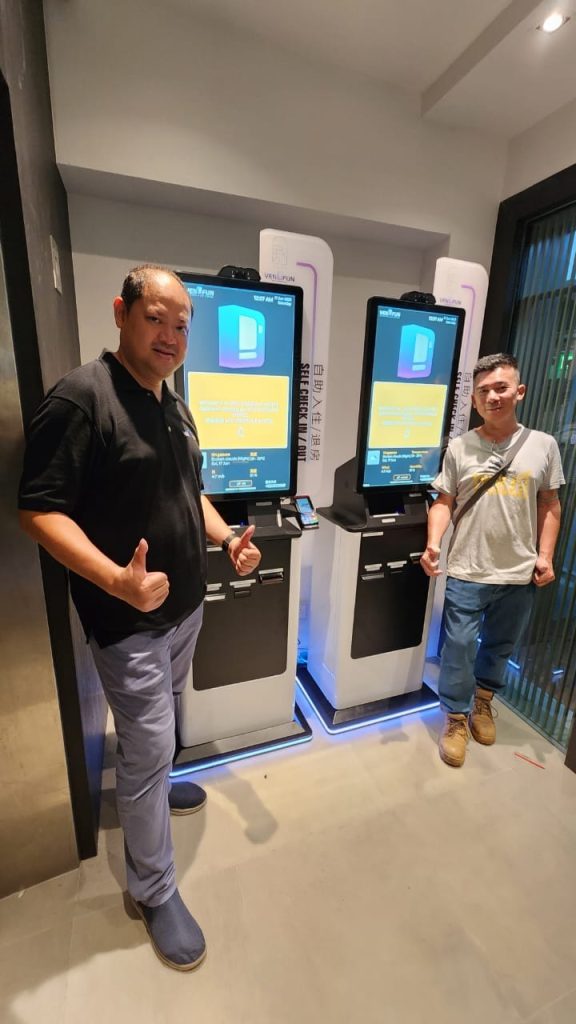
Vendfun Self Check-In fits well into this picture because it integrates smoothly into existing hotel environments. Operators do not need heavy infrastructure changes. The system adapts to different property sizes and guest profiles. That flexibility lowers implementation risk, which strengthens hotel kiosk ROI from the start. When setup stays simple, returns arrive faster.
The Real Challenges That Slow Down ROI
Hotel kiosk ROI does not improve automatically. Some projects stall because expectations stay unclear. Operators sometimes deploy technology without aligning it to daily workflows. When teams resist change or guests receive little guidance, usage stays low. Low usage stretches the self check-in kiosk ROI timeline.
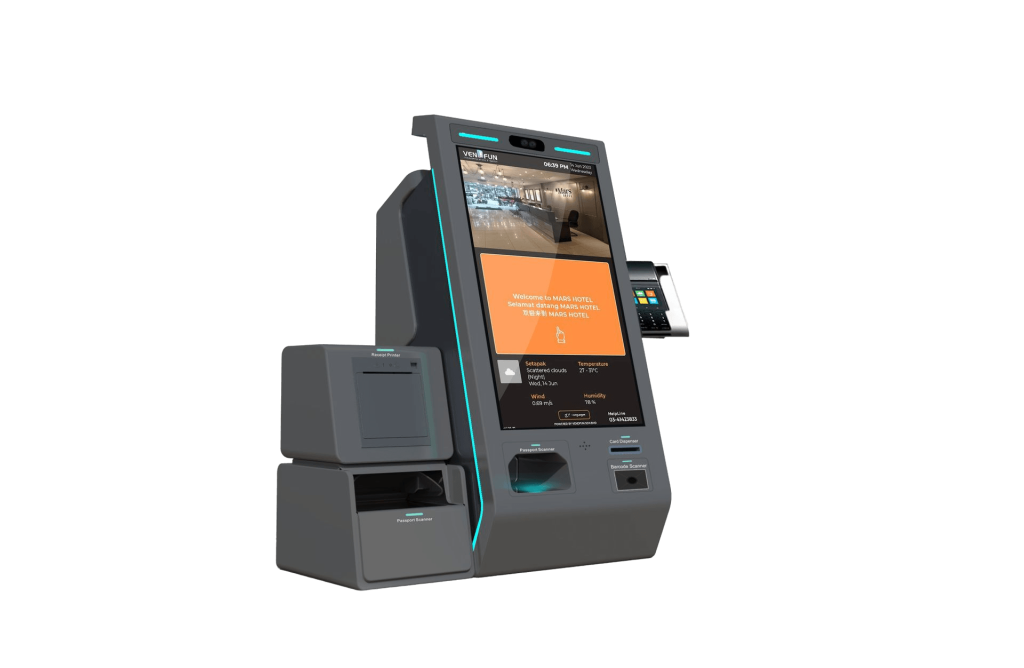
Integration challenges also affect results. A kiosk must work with the property management system and access controls. When data does not flow smoothly, staff step back in to fix issues. That defeats the goal of automation and weakens hotel check-in automation ROI. Training also plays a role. Staff need confidence in the system to support guests, not compete with the kiosk.
Another challenge lies in placement and communication. A kiosk hidden in a corner delivers poor results. Clear signage, good lighting, and intuitive screens matter more than advanced features. Hotel kiosk ROI improves when guests understand the value instantly. Without that clarity, even the best technology struggles to deliver quick returns.
Efficiency Plays That Maximize Kiosk Performance
Efficiency starts with process design. Hotels that map the guest journey before installation see stronger hotel kiosk ROI. They decide which steps the kiosk handles and which steps stay human. That clarity reduces friction.
Operational data also supports better decisions. Usage rates, average check-in time, and error frequency reveal improvement areas. Adjusting settings based on real data strengthens self check-in kiosk ROI over time. Vendfun Self Check-In supports this approach by offering insight without complex dashboards. Simplicity keeps teams focused.
Hotels also improve performance by setting clear expectations for guests. Pre-arrival messages that mention self check-in prepare guests mentally. That small step boosts adoption and shortens the kiosk payback period hotel operators track. Efficiency grows further when staff see kiosks as support tools, not replacements. Collaboration between people and technology drives sustainable hotel kiosk ROI.
How To Measure And Prove Kiosk ROI Fast
Proving hotel kiosk ROI requires practical metrics. Labor hours saved provide the clearest signal. Comparing front desk schedules before and after deployment reveals impact quickly. Guest throughput during peak times also matters. Shorter queues mean better flow and fewer complaints.
Revenue influence appears through indirect signals. Upsell opportunities at kiosks and improved review scores support long-term hotel check-in automation ROI. Cost reduction alone does not tell the full story. A balanced view strengthens confidence among finance managers and owners.
Vendfun Self Check-In simplifies reporting for operators who want clarity without complexity. Clear numbers support faster decisions and wider rollouts. When stakeholders see results within weeks, confidence grows. That confidence explains why many hospitality groups report hotel kiosk ROI within
Hotel kiosk ROI reflects more than technology adoption. It reflects operational maturity and clarity of purpose. Hotels that align kiosks with real workflows achieve faster payback and stronger guest experiences. Challenges exist, but solutions remain practical and accessible.
Self check-in technology now supports a wide range of hospitality concepts, from hotels to serviced apartments and food-focused venues. When teams focus on usability, integration, and communication, returns follow naturally. Vendfun Self Check-In shows how simplicity and efficiency support rapid hotel kiosk ROI without heavy disruption. For operators seeking measurable impact, payback in months has become a realistic expectation.
Frequently Asked Questions About Hotel Kiosk ROI
How fast can hotel kiosk ROI be achieved?
Many operators see hotel kiosk ROI within a few months, depending on staffing structure and guest volume.
What affects the self check-in kiosk ROI most?
Usage rate, staff adoption, and system integration have the strongest influence on returns.
Does hotel check-in automation ROI apply to small hotels?
Yes. Smaller properties often see faster impact due to lean teams and clear workflows.